
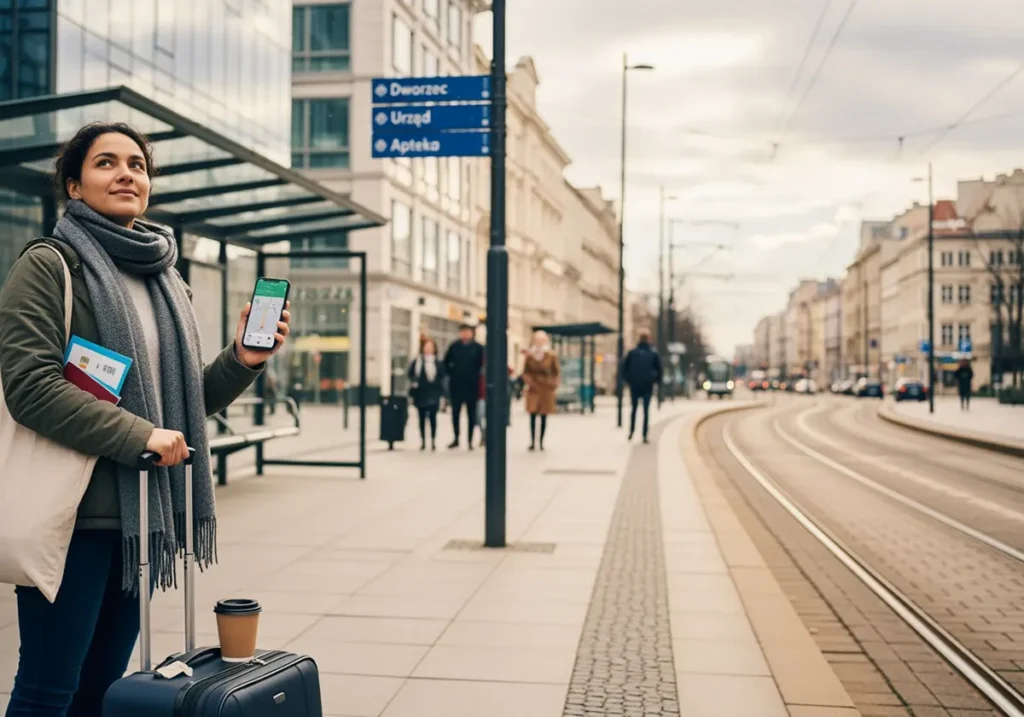
Moving to Poland from outside the European Union is a major life transition. While your visa application is crucial, relocating is often less about documents and more about adjusting to living in Poland as a newcomer. Many newcomers arrive well prepared on paper, yet still feel surprised, confused, or stressed during their first weeks – not because something is “wrong”, but because everyday systems and social norms work differently than they expect.
This article is not a checklist or a legal guide. Instead, it explains what often surprises non-EU foreigners, where uncertainty usually appears, and why understanding context matters as much as formal requirements. The goal is to help you arrive better prepared – mentally and practically – for how things usually work in Poland.
Moving to Poland: why expectations often clash with reality?
For many people coming to Poland from outside the European Union – including those from North and South America, Africa, Asia, and Australia – the first weeks can be surprisingly disorienting.
Old stereotypes about a “grey, post-communist country” often collide with a modern, well-organized reality. The biggest challenges are rarely related to safety or quality of life, but rather to expectations, bureaucracy, and unspoken rules that locals take for granted.
This guide focuses on what newcomers most often find surprising – and what is worth preparing for before arriving.
What surprises non-EU foreigners the most before arriving in Poland?
Is Poland safe? Safety and security for foreigners
One of the most common surprises, especially for people from the Americas, is how safe Polish cities feel.
- Children’s independence
Seeing children travel alone on public transport or play outside without adult supervision often feels shocking to newcomers. - Walking at night
Being able to walk through city centers late at night without constant fear is frequently described as a “luxury” by people who come from countries with higher street crime rates.
Banking in Poland and digital services: A cashless society?
Many visitors expect “old Europe” and are surprised to find the opposite.
- Cashless payments almost everywhere
Contactless card payments, mobile wallets, and BLIK are widely accepted – sometimes even at small market stalls or public toilets. - Parcel lockers (Paczkomaty)
The nationwide network of 24/7 parcel lockers is often mentioned as something that “should exist everywhere”.
The cultural barrier of not smiling
For people from English-speaking cultures, Polish public behavior can feel cold at first.
- No automatic “service smile”
Poles rarely smile at strangers without a reason. This is often misinterpreted as rudeness. - What people discover later
Once a relationship is established, many foreigners are surprised by how warm, loyal, and helpful Poles can be. Smiling is simply not a default social signal.
Public transport in Poland and city infrastructure
- Cleanliness
Many newcomers notice that Polish cities feel cleaner than places like Paris, London, or New York. - Public transport systems
While locals often complain about delays, visitors appreciate punctuality and the fact that route planning and ticket purchases can usually be handled through a single app.
Eating out and grocery shopping in Poland: Cultural tips
- Soup culture
The variety and frequency of soups (żurek, chłodnik, barszcz) often surprises newcomers. - No free tap water in restaurants
Unlike in the US or parts of Western Europe, free tap water is not standard in restaurants – something many visitors find confusing. - Sunday trading restrictions
Closed shopping malls and supermarkets on Sundays (Sunday trading ban) can be one of the biggest logistical surprises for people from outside the EU.
Do people speak English in Poland? Language barriers and tips
Polish often sounds intimidating to non-Slavic speakers, with its many consonant clusters. At the same time, many newcomers are surprised by how common English is among younger people.
A quick language story (and the point behind it)
I remember a moment from my own group of friends that still makes us smile. A friend from Turkey, still at the very beginning of learning Polish, wanted to give a woman in our group a compliment and say that something “smelled nice” (ładnie pachnie). Instead, he accidentally said ładnie śmierdzi – which in Polish means the opposite. It was genuinely funny, and no one took it badly, because everyone understood what he meant.
The reason I like this story is the “long-term outcome”: today he speaks Polish fluently, they got married, and I was even a witness at their wedding. It’s a simple reminder that early language mistakes are normal – and that progress comes faster than many newcomers expect.
A small cultural detail that often stands out: being asked to take off your shoes and wear slippers when visiting someone’s home. For many Poles, entering with shoes on is considered impolite.
Moving to Poland: Myths vs. Reality of Expat Life
Expectation: “A grey, post-communist country”
Reality: modern cities, green spaces, renovated historic buildings, and contemporary architecture.
Expectation: “Vodka everywhere, all the time”
Reality: a strong coffee culture, countless cafés, and a developed craft beer scene. Alcohol exists, but daily life looks very different from old stereotypes.
Expectation: “Cold weather and snow most of the year”
Reality: hot summers with temperatures reaching 30–35°C, and winters that may be rainy rather than snowy.
Expectation: “Outdated banking and slow internet”
Reality: modern banking infrastructure, fast internet, and widespread digital services – often more advanced than in some non-EU countries.
Expectation: “Everything is very cheap”
Reality: while cheaper than Switzerland or Norway, major Polish cities quickly correct expectations. Fuel, electronics, and rent can be surprisingly expensive for visitors from the US.
Expectation: “Nobody speaks English”
Reality: English is widely spoken among people under 40, and communication is usually easier than expected.
Challenges of relocating: Bureaucracy and Residence Permits
Karta Pobytu (pronounced: KAR-tah poh-BIH-too)
For non-EU foreigners, stress rarely comes from physical safety. It usually comes from bureaucracy, language nuances, and rigid procedures.
Residence permits and legalization
- long waiting times at regional offices,
- unclear communication,
- uncertainty about the right to work during ongoing procedures.
Tip: Most delays in residence permits are caused by missing stamps or incorrect translations. Check the essential documents to prepare before arrival to avoid these common traps.
Renting an apartment in Poland as a foreigner
- Occasional lease contracts that require a notary and a backup address,
- fear of rejection due to language or nationality,
- mandatory address registration (meldunek), unfamiliar in many countries.
Social distance and communication style
- limited small talk with strangers,
- very direct communication style, which may feel harsh to people from high-context cultures.
Healthcare system navigation
- confusion between public (NFZ) and private healthcare,
- uncertainty about where to go after regular clinic hours,
- fear of emergency rooms due to long waiting times.
Public transport rules and fines
Even though transport is praised, ticket validation systems and strict inspections can be stressful for newcomers unfamiliar with local rules.
Why a simple “document checklist” is not enough
For non-EU foreigners, having the right documents is only the beginning. The real challenge is understanding how those documents are expected to function within the Polish system.
Common issues include:
- documents with unexpected validity limits,
- sworn translations required only from translators registered in Poland,
- differences between copies, notarized copies, and originals,
- rigid address requirements that create legal dead ends.
A checklist shows the ingredients – but not how the system expects them to be combined.
Common mistakes made before arriving in Poland
- assuming a tourist visa allows employment,
- forgetting apostille or legalization of documents,
- translating documents outside Poland,
- underestimating initial costs (deposits, agency fees),
- arriving without translated medical documentation,
- ignoring differences in banking systems,
- misunderstanding Polish address formats.
(See our detailed breakdown of how to handle apostilles and sworn translations for Poland). Many of these mistakes are difficult or impossible to fix from inside Poland.
Is it all negative?
No. Many foreigners report that after 6-12 months, stress decreases significantly. Once people understand the rules and cultural distance fades, Poland often feels predictable, safe, and stable – especially compared to many non-EU countries.
What this guide does not cover
This article does not provide legal, medical, or immigration advice.
It is intended to help readers understand context and expectations, not to guide individual decisions.
Final thoughts
Preparing for Poland is less about collecting documents and more about adjusting expectations. The system may feel rigid, but it is also consistent – and once understood, far less stressful than it appears at first glance.
Frequently Asked Questions (FAQ)
Is Poland safe for non-EU foreigners?
Yes, Poland is consistently ranked as one of the safest countries in Europe. Newcomers are often surprised by the low crime rates and the safety of walking alone at night in major cities. However, like everywhere, it is always wise to stay aware of your surroundings in crowded tourist areas.
Can I live in Poland only speaking English?
In large cities like Warsaw, Kraków, or Wrocław, you can easily manage daily life using English, especially with younger people and in corporate environments. However, understanding the language barrier in Poland is important – having basic Polish phrases or a translation app is very helpful for dealing with administration (Urząd) or older generations.
What is the most difficult part of relocating to Poland?
Most expats agree that Polish bureaucracy and the process of obtaining a Karta Pobytu (residence card) are the biggest challenges. The procedures can be rigid and time-consuming, so it is crucial to have your documents (like birth certificates or diplomas) legalized or apostilled before you arrive.
What is the “Sunday trading ban” in Poland?
Poland has a law where most supermarkets and shopping malls are closed on Sundays. There are a few “trading Sundays” throughout the year, but generally, you should plan your grocery shopping for Saturdays. Small convenience stores (like Żabka) are usually open, but they can be more expensive.
For a complete list of what to pack in your “official folder,” see our Document Preparation Guide.
